Moving to Utah County: Your Complete Relocation Guide
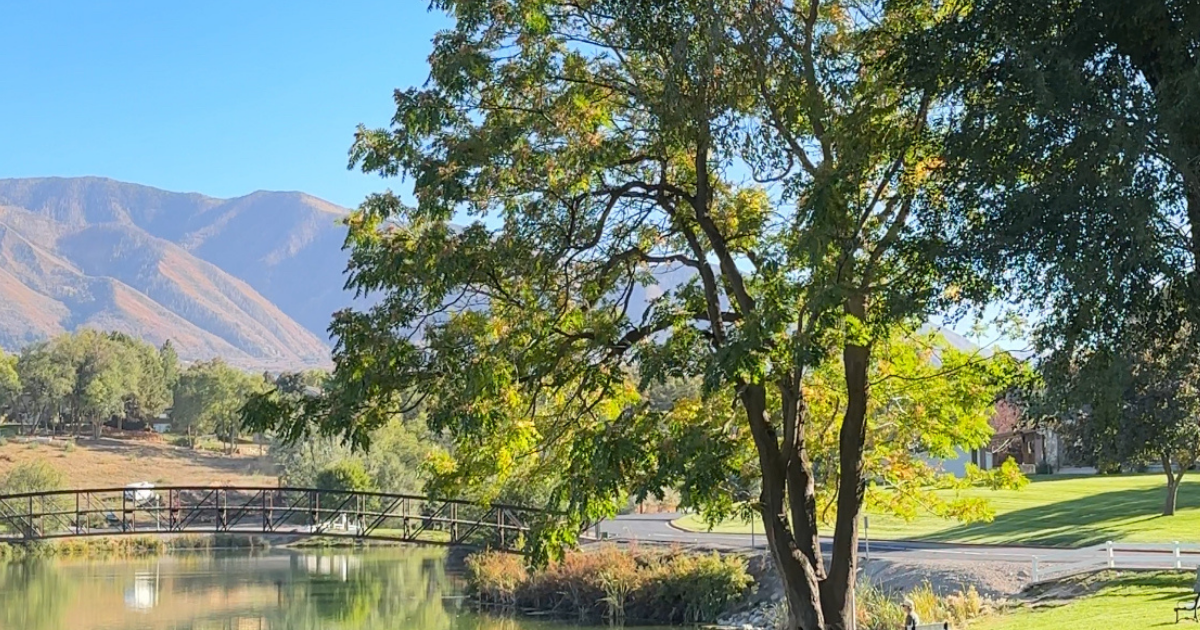
If you're researching what it's actually like to move to Utah County from out of state, you're already ahead of most people who land here on a relocation package, take the first home they see in Lehi, and then spend their first year wishing someone had told them how different American Fork is from Eagle Mountain — or that the school district their kids are zoned for is about to split into three.
This guide is the one I wish every out-of-state buyer had before their first house-hunting trip. I'm a Utah County agent and the founder of Foley Home Collective, and almost every week I'm walking someone through this same set of questions: Where should we actually live? Are the schools good? What does the housing market look like right now? What's the LDS culture thing? How bad is the commute to Silicon Slopes? Will I freeze in winter?
Here's the honest, ground-level answer to all of it.
Where Utah County actually is (and what it's near)
Utah County sits directly south of Salt Lake County along Interstate 15, sandwiched between the Wasatch Mountains to the east and Utah Lake to the west. The county runs roughly from Lehi at the north end down through Provo, Spanish Fork, and Payson to Santaquin at the south. Salt Lake City International Airport is about 35–45 minutes north of most Utah County cities (no traffic). Park City is about an hour northeast. The southern Utah national parks — Zion, Bryce, Capitol Reef — are a 3–4 hour drive south on I-15.
The shorthand most relocators latch onto: Utah County is the southern half of the Wasatch Front, the urbanized corridor that runs along the mountains. About 750,000 people live here, and it's one of the fastest-growing counties in the United States.
Why people are moving to Utah County in 2026
Three things drive most relocations to Utah County right now:
Jobs in tech. Silicon Slopes — the tech corridor centered on Lehi but stretching from Draper through Provo — is home to over 1,000 companies, including Adobe, Microsoft, Oracle, Qualtrics, BambooHR, Domo, and Entrata. The Salt Lake metro has roughly 67,000 tech workers and has consistently ranked among the fastest-growing tech job markets in the country. Hiring has cooled from the 2021 frenzy, but the long-term trajectory is up and to the right.
Lifestyle. Mountains in your backyard, a 15-minute drive from your front door to a trailhead or a ski lift in winter, low crime, family-oriented neighborhoods, and a culture that genuinely values community. For people coming from California, Texas, or the East Coast, the lifestyle dividend is real.
Cost relative to coastal markets. A four-bedroom home that runs $1.6M in the Bay Area or $1.2M in greater Seattle can still be found in Utah County in the $700K–$900K range. Utah is not cheap anymore — that ship sailed in 2020 — but it's still a discount on Silicon Valley salaries.
The Utah County housing market right now
Here's where the market actually sits as of spring 2026:
Median sale price (Utah County): $533,000, up about 3.5% year over year
Median days on market: 55 days (up from 35 a year ago — buyers have more time and leverage than they did in 2022)
30-year fixed mortgage rate: hovering around 6.37%, per the most recent data found here
Inventory: climbing compared to the 2021–2022 squeeze, which is good news for relocating buyers
What this means in practice: this is the most balanced market we've had in five years. You can usually negotiate, you can include inspections, and you don't need to waive contingencies to be competitive. New construction in Saratoga Springs, Eagle Mountain, Vineyard, and southern Utah County (Salem, Spanish Fork, Santaquin) is especially negotiable right now — builders are offering rate buydowns, closing cost credits, and design center incentives.
Choosing your Utah County city: a relocator's cheat sheet
The biggest mistake out-of-state buyers make is treating Utah County as one market. It isn't. Here's how I usually break it down for new clients, by buyer profile:
For tech workers commuting to Silicon Slopes (Lehi/Draper):
Lehi — closest to the action; expect $650K–$900K for a single family home, more for the master-planned communities like Traverse Mountain
American Fork — slightly more established, slightly more space for the money, 10-minute commute
Saratoga Springs / Eagle Mountain — newer construction at the some of the best prices in the county; the trade-off is a longer commute (20–35 minutes to Lehi) and a still-developing town center
Highland / Alpine — premium foothills neighborhoods; bigger lots, higher price points ($900K–$1.5M+), strong schools
For families prioritizing established neighborhoods and schools:
Pleasant Grove — mature trees, walkable pockets, easy mountain access
Mapleton — quieter, lower-density, sought after by families wanting space
Salem — small-town feel, family-focused, more home for the money than the north end
For value buyers and first-time homeowners:
Spanish Fork — one of the best price-to-quality ratios in the county
Payson — even more affordable; longer commute to Silicon Slopes but a real community
Santaquin — the southern frontier; rural feel, newer construction, lowest entry prices in the county
For culture, walkability, and a college-town feel:
Provo — home to BYU; restaurants, downtown energy, older housing stock; great for younger buyers and remote workers
Orem — denser than most of Utah County, more apartments and townhomes, central to everything
If you're not sure where you fit, that's normal — most relocators don't know until they've walked a few neighborhoods. I do drive-around tours for out-of-state clients specifically to fix this.
Schools: what every relocating parent needs to know
This is the single most important section if you have kids. Utah County is served by three main public school districts — and one of them is about to be dissolved.
Alpine School Districtcurrently serves the northern half of Utah County and is the largest district in Utah. In November 2024, voters approved splitting it into three new districts, with the new districts beginning operations in the 2027 school year:
Central District: Lehi, American Fork, Highland, Cedar Hills, Alpine, and part of Draper
Lake Mountain District (West): Eagle Mountain, Saratoga Springs, Cedar Fort, and Fairfield
Timpanogos District (South): Orem, Pleasant Grove, Lindon, and Vineyard
If you're moving with school-age kids in the next year or two, this affects you. Boundaries within the new districts are still being finalized, and the practical impact on individual schools — class sizes, programs, transportation — is still being worked out. Don't pick a house based on assumed school assignments without verifying current and projected boundaries.
Nebo School District serves the southern half of Utah County — Spanish Fork, Salem, Mapleton, Payson, Santaquin, and surrounding communities. Nebo is Utah's 7th largest district and is generally well-regarded by families.
Provo City School District is a standalone district serving Provo only.
For current ratings, test scores, and individual school performancecheck out Niche ratings here.Utah County school district rankings on Niche is a useful starting point — though I always recommend cross-checking against the Utah State Board of Education's report card and, ideally, actually visiting the schools you're considering.
Utah consistently ranks within the top states for quality of education nationwide.
Taxes: what you'll actually pay
Utah is a low-to-moderate tax state, and the structure is simpler than most:
State income tax: flat 4.55% on all taxable income
Sales tax in Utah County: 6.75% combined (state + local)
Effective property tax rate: around 0.49% — among the lowest in the nation. Median property tax in Utah County is roughly $2,537/year
No estate or inheritance tax
Utah also gives primary residences a 45% property tax exemption — meaning you're only taxed on 55% of the home's market value. This is huge for relocators coming from states like Texas (where property taxes run 1.6–2.5%) or Illinois.
For full state by state tax detail, the AARP Utah State tax guide is the clearest plain english breakdown i’ve found. You can check that out here.
Weather, lifestyle, and the outdoors
Utah County has four real seasons, not the watered-down version some sunbelt transplants assume. Summers are hot and dry — generally 85–95°F in July and August with low humidity. Winters bring snow to the valley, more in the foothills, and dramatically more in the mountains. Spring and fall are gorgeous and short.
The "greatest snow on earth" marketing isn't hyperbole — Sundance Resort is 30 minutes from Provo, Park City and Deer Valley about an hour, and Brighton/Solitude about 75 minutes. In summer, the same canyons turn into world-class hiking, mountain biking, and fishing. Utah Lake is on the west side of the valley for boating and paddleboarding.
Winter air quality is the trade-off most relocators don't anticipate. The valley occasionally sees inversions — cold air traps pollution near the valley floor for stretches in January and February. It's livable, it's not Beijing, but it's real. The foothills neighborhoods (Highland, Cedar Hills, Alpine, parts of east Provo) sit above the inversion line and have noticeably better winter air. Overall Utah County is far better than Salt Lake County when it comes to air quality, but we do still experience the inversion, just not as bad as Salt Lake.
The cultural question
Almost every out-of-state buyer asks me some version of this. The factual answer: Utah has the highest concentration of members of The Church of Jesus Christ of Latter-day Saints of any state, and Utah County is home to Brigham Young University in Provo. That demographic reality shapes some visible cultural patterns county-wide — many businesses are closed on Sundays, alcohol is sold through state liquor stores rather than grocery stores, and a strong family and community orientation runs through civic life.
What's changed dramatically over the past decade is the overall mix of who lives here. Silicon Slopes has brought tens of thousands of tech workers from across the country and around the world. BYU and UVU draw students, faculty, and staff from every state and dozens of nations. Master-planned communities have filled with families relocating from California, Texas, Washington, the Northeast, and the Midwest. The result is a county that's significantly more diverse — religiously, culturally, professionally, and politically — than the Utah County of 15 or 20 years ago.
Practically, that means newcomers of every background are settling into Utah County all the time, and the infrastructure that supports a diverse population has grown with them: a wider range of restaurants and grocery stores, places of worship across many faiths and none, social and recreational groups built around shared interests rather than shared backgrounds, and active newcomer and expat communities in nearly every city.
As a real estate agent, I can't steer buyers toward or away from specific neighborhoods based on religion, family status, or any other protected characteristic — that's Fair Housing law, and it's also how I believe real estate should be practiced. What I can tell you is that the question of "will I fit in?" has a much different answer in 2026 than it would have had a generation ago, and that the best way to find your people in Utah County is the same as anywhere else: spend time in a few neighborhoods, talk to the people at the coffee shop, check out a community event, and trust what you feel.
Getting around
I-15 is the spine of the county. Most commutes happen on it. Lehi-to-Provo runs about 20–25 minutes in normal traffic; rush hour adds 10–15 minutes.
FrontRunner, Utah's commuter rail, runs from Provo through American Fork and Lehi up to Salt Lake City and Ogden. It's a real option if you work downtown SLC.
Salt Lake City International Airport is the closest major airport — direct flights to most major US cities and a growing international list.
Provo Airport has historically been a small airport, but they are adding new direct flights all the time with an expansion goal to become an international airport. They are currently undergoing a $138 millon expansion plan
Public transit beyond FrontRunner is limited. You'll want a car.

What surprises out-of-state buyers most
Five things come up over and over from new arrivals:
Growth is faster than the photos suggest. Some of the cities I'd describe as "sleepy" five years ago — Saratoga Springs, Eagle Mountain, Vineyard, Santaquin — are now major construction zones.
The mountains feel closer than they look. "Mountain access" in Utah County isn't a 90-minute drive — it's 15.
Yards are smaller than expected. New construction in master-planned communities often comes on 0.13-0.25 acre lots. If you want more land, look at Mapleton, Salem, or the foothills.
HOAs are common in newer neighborhoods. Know what you're signing.
Property taxes are dramatically lower than most people's prior state. This often offsets the income tax for relocators from no-income-tax states like Washington, Texas, or Florida.
Your Utah County relocation roadmap
Here's the order I'd recommend for an out-of-state move, based on the dozens of relocations I've walked clients through:
6+ months out: Get clear on your work location (commute determines neighborhood) and your school priorities (Alpine split affects this for kids in K–8).
3–4 months out: Plan a 2–3 day scouting trip. Drive the neighborhoods you're considering at different times of day. Visit schools. Eat at local restaurants. Get a real feel.
2–3 months out: Get pre-approved with a local lender (national lenders often miss Utah-specific loan programs).
1–2 months out: Start touring homes seriously, ideally with one or two days back on the ground.
30 days out: Under contract, inspections, closing logistics.
Move week: Coordinate utilities, transfer your driver's license within 60 days of move-in.
Ready to make Utah County home?
This guide covers the foundation, but every relocation is specific. The right neighborhood for a remote tech worker with two young kids looks different from the right neighborhood for empty nesters who want mountain views and a downtown coffee shop walk.
If you're seriously considering Utah County, the most useful thing I can do is have a real conversation. I'll send you the current listings that actually fit your situation, walk you through neighborhoods on a video call, and set up a tour for your scouting trip. No pressure, no automated drip emails — just a clear-eyed look at what your move would actually look like.

About Sam Foley
Sam Foley is a Utah County real estate specialist helping families buy, sell, and relocate across Lehi, Pleasant Grove, Spanish Fork, Salem, Mapleton, and the surrounding communities. Whether you're ready to upgrade your current home, relocating to Utah County from out of state, or just starting to explore your options, Sam brings local expertise and a straightforward approach to every conversation.
📍 Based in Utah County, Utah — lifelong local
📸 Follow for daily market updates and neighborhood content: @homesbysamfoley on Instagram
🏡 Subscribe to Utah County Insider on Substack for weekly real estate insights
📞 Ready to talk? Reach out directly — 385.309.8300 · sam@foleyhomecollective.com
The information in this post is intended for general educational purposes. For advice specific to your situation, reach out directly.